
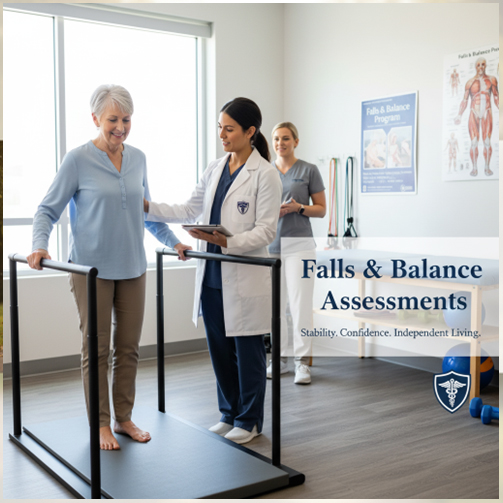
Falls & Balance
Understanding Falls and Balance Problems
Maintaining good balance is essential for safety, confidence, and independence — especially as we age. Problems with balance or frequent falls are not just a normal part of getting older; they can be signs of underlying medical or neurological conditions that need evaluation.
Causes of Balance Problems
Balance issues and falls can result from a wide range of causes, including:
- Inner ear (vestibular) disorders
- Vision or sensory changes
- Muscle weakness or joint stiffness
- Neurological conditions such as Parkinson’s disease or neuropathy
- Medication side effects
- Cardiovascular or blood pressure changes
Identifying the root cause is the first step toward improving your stability and preventing future falls.
Our Approach
At our clinic, we perform a comprehensive Falls and Balance Assessment that may include:
- Detailed medical and medication review
- Gait (walking) and posture analysis
- Strength and coordination testing
- Dizziness and vertigo evaluation
- Fall risk screening and prevention planning
We take a holistic approach — addressing not only the physical aspect but also lifestyle, home safety, and rehabilitation strategies.
Treatment and Prevention
Based on your individual assessment, we’ll develop a personalized plan that may include:
- Referral to physiotherapist for strength and balance training exercises
- Referral to physiotherapist for Vestibular rehabilitation therapy
- Medication adjustments (if appropriate)
- Visual assessment and footwear advice
- Referral to Occupational therapist for Home safety modifications
The goal is to help you build confidence, move safely, and live independently.
When to See a Doctor
You should seek medical advice if you experience:
- Frequent falls or near-falls
- Dizziness, light-headedness, or vertigo
- Unsteadiness when walking
- Fear of falling that limits your activities
Early assessment and intervention can make a significant difference in maintaining mobility and quality of life.