
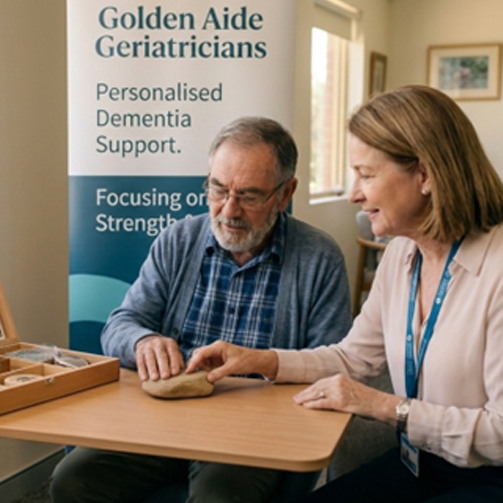
Behavioural and Psychological Symptoms of Dementia (BPSD) Management
Compassionate, Person-Centred Care for Dementia
At Golden Aide Geriatricians, we understand that a diagnosis of dementia is only one part of the journey. Often, the most challenging aspects for patients and their families are the accompanying Behavioral and Psychological Symptoms of Dementia (BPSD).
These changes in behavior and mood can be distressing, confusing, and exhaustive for carers. It is crucial to remember that these symptoms are not a choice or a reflection of the person’s personality; they are manifestations of the changes occurring in the brain.
Our aim is to provide expert BPSD management, focusing on restoring quality of life and supporting the carers.
Conditions We Evaluate
An accurate, early assessment of BPSD is vital because these symptoms are often the primary cause of carer stress and burnout, or the trigger for residential facility placement.
We conduct a holistic “Needs-Based” Assessment to understand why the behavior is occurring, analyzing common triggers, such as:
- Unmet physical needs: Pain, constipation, infection, or medication side effects.
- Emotional triggers: Fear, confusion, loneliness, or frustration.
- Environmental factors: Over-stimulation, noise, unfamiliar surroundings, or poor lighting.
What to Expect: Our Assessment and Intervention Process
We prioritize a respectful and dignified environment for all assessments.
- In-Depth Consultation
We work closely with the person with cognitive impairment but a primary part of the consultation involves gathering information from families and formal carers.
- Physiological Review and Investigations
We perform a complete medical review, including physical examination and often urine or blood tests, to exclude treatable causes like pain or infection (a very common trigger for BPSD).
- Structured Care Plan Development
Our management plans are individualized and focus on non-pharmacological (drug-free) strategies first.
Management Approach
Non-Pharmacological Strategies (First-Line)
We prioritize evidence-based, person-centered interventions to modify triggers, including:
- Environmental modifications: Adapting the living space (soft lighting, familiar objects) to reduce stress.
- Activity-based therapies: Encouraging personalized hobbies or music.
- Carer education and communication training: Strategies for supportive listening and reducing conflict.
- Referrals to allied health: Psychology, occupational therapy, physiotherapy.
- Referrals to Dementia Australia and the Dementia Behaviour Management Advisory Service (DBMAS) to coordinate broader support systems.
Specialized Medication Management (When Necessary)
If symptoms remain severe, cause significant distress, or pose a safety risk, specialized psychotropic medication may be carefully considered after ensuring non-drug approaches have been optimized.
- Initiating the lowest effective dose.
- Implementing regular reviews to de-prescribe or stop medications as soon as symptoms stabilize.
Find Clarity and Supportive Care
Take control of the difficult moments. Contact Golden Aide Geriatricians today to schedule a comprehensive Geriatric assessment.